

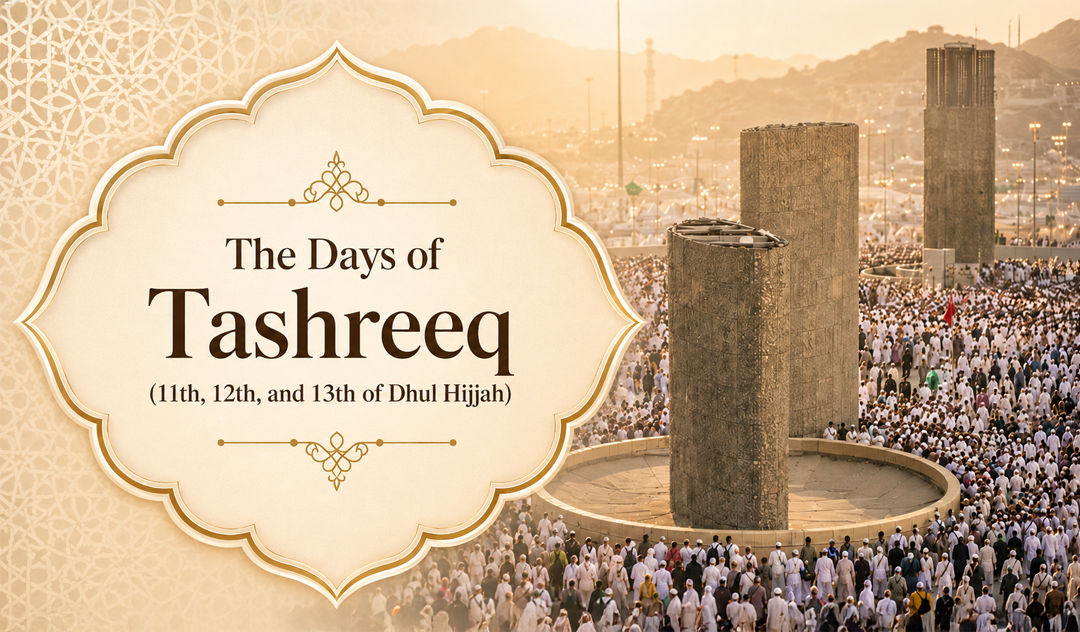
While the excitement of Eid al-Adha is a major highlight of Hajj, the pilgrimage doesn’t end there. The three days following the 10th of Dhul Hijjah are known as Ayyam al-Tashreeq. These days are a vital part of the sacred season, offering a time for continued worship, reflection, and the completion of the final Hajj rites.
The term “Tashreeq” literally means “the days of drying meat.” In the past, pilgrims would season their sacrificial meat with salt and dry it in the sun to preserve it for their long journeys home.
Today, while we have modern refrigeration, the name remains a link to the pilgrimage’s history.
Why the Days of Tashreeq Hold Importance
It is common for people to feel that the “big” moments of Hajj are over once the 10th day passes. However, these final days are incredibly significant because they:
Extend the Blessings
They allow us to stay in the spiritual “zone” of Dhul Hijjah for a little longer.
Focus on Remembrance
They are specifically designated for the Dhikr (remembrance) of Allah.
Complete the Rituals
They include the final act of stoning the Jamarat, which reinforces the lesson of resisting temptation.
A Lesson in Consistency
They remind us that worship is a lifestyle, not just a one-day event.
And remember Allah during ˹these˺ appointed days. Whoever departs swiftly on the second day is not sinful, neither are those who stay behind ˹till the third—seeking additional reward˺, so long as they are mindful ˹of their Lord˺. And be mindful of Allah, and know that to Him you will ˹all˺ be gathered.
Quran: (2:203)
Rituals of the 11th Day of Dhul Hijjah
On the 11th of Dhul Hijjah, the main ritual is the pelting of the three Jamarat (pillars). Unlike the previous day, when only the large pillar was stoned, today you will visit all three.
- Pilgrims must perform the pelting.
- Pilgrims throw seven pebbles at each of the three pillars, starting with the smallest and ending with the largest.
- After completing the stoning, pilgrims return to the camp. They can utilize this time to read the Qur’an, pray, and make Dua.
Rituals of the 12th Day of Dhul Hijjah
It is often the day many pilgrims prepare to leave the valley of Mina. The actions are a repeat of the 11th of Dhul Hijjah.
- Again, the pilgrims pelt all three Jamarat.
- If pilgrims wish to leave Mina on the 12th, they must depart before sunset. If the sun sets while they are still in Mina, it is generally required to stay for one more night and pelt again on the 13th of Dhul Hijjah.
Rituals of the 13th Day of Dhul Hijjah
While many pilgrims head back to Makkah on the 12th of Dhul Hijjah, staying until the 13th is a beautiful and highly recommended Sunnah.
The pilgrims perform the stoning of all three pillars one last time.
The Final Act of Tawaf al-Wada
Tawaf al-Wada or Tawaf al-Sadr refer to the same Tawaf performed before leaving Makkah after completing Hajj.
- طَوَافُ الوَدَاع — Tawaf al-Wada (Farewell Tawaf)
- طَوَافُ الصَّدْر — Tawaf al-Sadr
It is a final walk around the Kaaba to say goodbye to the House of Allah and to ask for your Hajj to be accepted. It is a deeply emotional moment for every pilgrim as they prepare to return to their normal lives.
˹They will be told,˺ “Eat and drink joyfully for what you did in the days gone by.”
Quran: (69:24)
Wrap Up
The Days of Tashreeq are the closing chapters of a beautiful journey. They give the pilgrim a chance to slow down, reflect on their experiences, and finish their duties with excellence.
As you perform the final Tawaf, you carry the spirit of Hajj back to your home, turning a temporary journey into a lifelong transformation. This final stage is not just about leaving a place, but about carrying a new version of yourself into the world. The patience learned in the heat of Mina and the focus found at the Jamarat become the tools you use to navigate life’s daily challenges.
Every step taken on this rocky landscape is a witness to your devotion, and every prayer made is a seed planted for a better future. As you bid farewell to the Kaaba, remember that the end of your Hajj is truly the beginning of a more purposeful, spiritual life.