

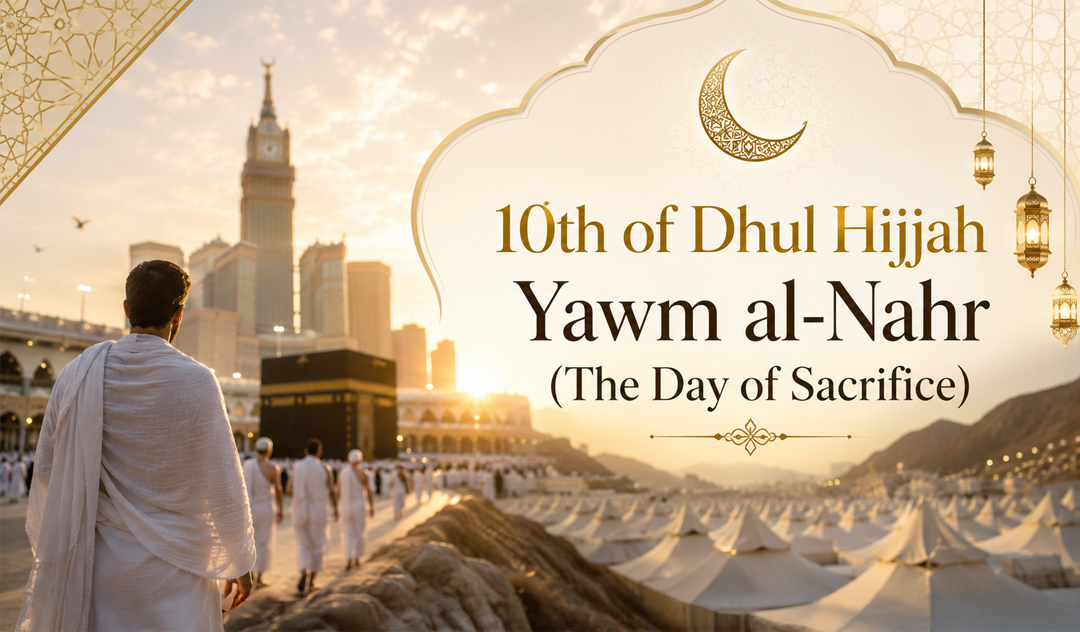
The 10th of Dhul Hijjah is perhaps the busiest and most rewarding day for a pilgrim. Known as Yawm al-Nahr, or the Day of Sacrifice, it marks a major turning point in the Hajj journey.
While Muslims around the globe are waking up to celebrate Eid al-Adha, the pilgrims are engaged in a series of powerful rituals that test their physical endurance and strengthen their spiritual resolve.
Complete the pilgrimage and minor pilgrimage for Allah.1 But if prevented ˹from proceeding˺, then ˹offer˺ whatever sacrificial animals you can afford. And do not shave your heads until the sacrificial animal reaches its destination. But if any of you is ill or has a scalp ailment ˹requiring shaving˺, then compensate either by fasting, charity, or a sacrificial offering. In times of peace, you may combine the pilgrimage and minor pilgrimage then make the sacrificial offering you can afford. Whoever cannot afford that ˹offering˺, let them fast three days during pilgrimage and seven after returning ˹home˺—completing ten. These offerings are for those who do not live near the Sacred House. And be mindful of Allah, and know that Allah is severe in punishment.
[Qur’an | 2:196]
Leaving Muzdalifah
The day begins early. After spending the night under the open sky in Muzdalifah, pilgrims perform the Fajr (dawn) prayer. Once the prayer is finished, the journey back toward the tent city of Mina begins.
Throughout this walk or ride, pilgrims continue to recite the Talbiyah with conviction, keeping their hearts focused on the purpose of their travel.
This transition from the quiet, reflective night in the plains of Muzdalifah to the active rituals of Mina marks the start of the Eid celebrations.
Rami, Stoning the Jamarat
One of the most recognizable parts of Hajj is the ritual of Rami, also known as the “stoning of the devil.” On the 10th of Dhul Hijjah, pilgrims head to the site of the stone pillars in Mina to perform the first of three days of stoning.
Indeed, when Satan whispers to those mindful ˹of Allah˺, they remember ˹their Lord˺, then they start to see ˹things˺ clearly.
(Quran: 7,201)
Rami’s act is deeply symbolic. It honors the actions of Prophet Ibrahim (AS) when he was faced with the ultimate trial: the command from Allah to sacrifice his son, Isma’il (AS).
Surely Satan is an enemy to you, so take him as an enemy. He only invites his followers to become inmates of the Blaze.
(Quran: 35,6)
As Ibrahim (AS) traveled to fulfill this command, Iblis (Satan) appeared three times to tempt him into disobedience.
At each location, following the instruction of Angel Jibreel (AS), Ibrahim (AS) threw seven stones at the devil to drive him away.
Important Reminders about Rami:
Stoning or Rami is one of the most spiritually uplifting aspects of Hajj.
Remembering Hazrat Ibrahim AS
A common misconception is that the devil is actually trapped inside the pillars. This is not true. The pillars are markers that recall the places where Ibrahim (AS) resisted temptation.
A Personal Stand
By throwing pebbles, the pilgrim makes a symbolic promise to actively resist the whispers of Satan in their daily lives.
Beware of the Tricks of Satan
He distorts the truth and convinces you that the sins you are committing are acceptable since everyone is doing them. So, ask Allah to forgive your sins.
O humanity! Indeed, Allah’s promise is true. So do not let the life of this world deceive you, nor let the Chief Deceiver1 deceive you about Allah.
(Quran: 35,5)
Qurbani: The Act of Sacrifice
After the first round of stoning at Jamarat al-Aqaba, the focus shifts to Qurbani or the Udhiyah (the animal sacrifice).
Note: Udhiyah is the same as Qurbani. It is the animal sacrifice of livestock during the days of Eid al-Adha.
This act is a core part of the 10th day of Dhul Hijjah, though it can be performed on any of the three days of Eid.
This sacrifice is an act of “Hady,” offered by the pilgrim to show gratitude to Allah. It mirrors the animal that Allah provided to Ibrahim (AS) after he proved his total devotion.
The sacrifice is offered with a few conditions in the light of Islamic teachings:
- The selected animal should have reached the age prescribed in Islam.
- It should be slaughtered from the 10th of Dhul Hijjah to the 12th of Dhul Hijjah.
- The animal must be healthy and free of abnormalities or disease.
Celebrating Eid al-Adha
While the pilgrims are busy in the valley of Mina, the rest of the Muslim Ummah joins them in spirit through the celebration of Eid al-Adha.
Global Unity
Whether in Makkah or miles away, Muslims perform the Eid prayer and offer their own Qurbani.
Emphasis on Charity
The distribution of meat ensures that even the most vulnerable members of society can celebrate the day with a good meal.
Virtuous Days
The 10th falls within the first ten days of Dhul Hijjah, which are considered the most blessed days of the entire year.
Next Steps for the Pilgrims
Once the stoning is finished and the sacrifice is confirmed, the pilgrim moves on to the next stages of the day:
Halq or Taqsir
Men shave their heads (Halq) or trim their hair (Taqsir), while women trim a small portion of their hair. This symbolizes a spiritual rebirth and a fresh start.
Exiting Ihram
After hair clipping, the Ihram restrictions are partially lifted. Pilgrims can change back into their regular clothes.
Tawaf al-Ifadah
Tawaf al-Ifadah is also called Tawaf al-Ziyarah. Many pilgrims head to the Kaaba in Makkah to perform this essential Tawaf, which is a pillar of Hajj.
Then let them groom themselves, fulfill their vows, and circle the Ancient House.
Surah Al-Hajj 22:29
Summary of the 10th Day Rituals
To keep the journey organized, remember these key actions for Yawm al-Nahr:
- Depart Muzdalifah after Fajr prayer
- Perform Rami (stoning) at Jamarat al-Aqaba using seven pebbles
- Ensure the Qurbani (sacrifice) is completed
- Shave or trim the hair to partially exit the state of Ihram
- Head to Makkah for Tawaf al-Ifadah and Sa’i (if not already completed)
Ending Note
The 10th of Dhul Hijjah is a day of action, sacrifice, and immense joy. It serves as a reminder that through obedience to Allah and resistance to temptation, one can achieve a state of spiritual purity and closeness to the Divine.
As pilgrims complete the stoning and the Qurbani, they let go of their old selves and embrace a future filled with hope and devotion. This day teaches us that true happiness comes from submitting to a higher purpose and standing united with the global community. It is a powerful conclusion to the main rites, leaving every heart filled with gratitude and peace.