

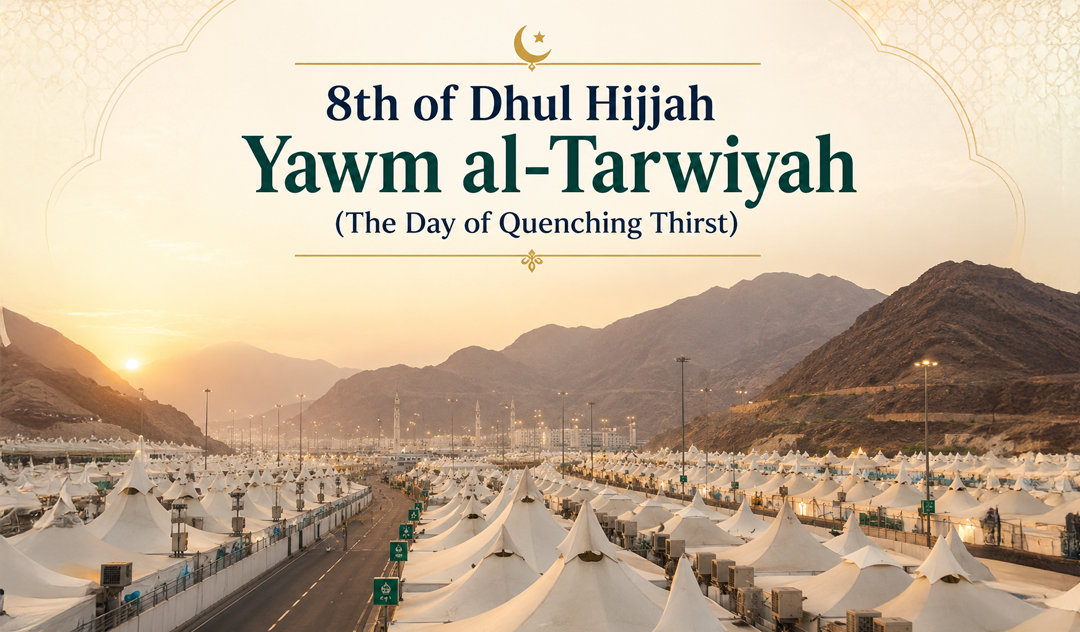
The Hajj is a journey of a lifetime, and it officially begins on the 8th day of Dhul Hijjah. This day is known as Yawm al-Tarwiyah, which translates to “The Day of Quenching Thirst.” Historically, this name comes from a time when water was scarce in the desert.
Pilgrims would spend this day in Mina gathering and drinking enough water to prepare themselves and their animals for the long, hot trek to Mount Arafah the following day.
Today, while modern facilities provide plenty of water and food, the name remains a reminder of the preparation required for the spiritual journey ahead.
Understanding Hajj al-Tamattu and the Return to Ihram
Many pilgrims perform Hajj al-Tamattu, which is one of the most common ways to complete the pilgrimage. In this type, the traveler makes two separate intentions: one for Umrah and one for Hajj.
The Umrah Phase
Upon arriving in Makkah weeks or days before Hajj, the pilgrim enters Ihram, performs Umrah, and then exits the state of Ihram by clipping or shaving their hair.
They return to wearing regular clothes and can go about their daily lives in Makkah.
The Hajj Phase
On the 8th of Dhul Hijjah, these same pilgrims must re-enter the sacred state of Ihram from their place of stay (hotel or home) to begin the official Hajj rituals.
Hajj al-Qiran or Hajj al-Ifrad
If you are performing Hajj al-Qiran or Hajj al-Ifrad, you are already in the state of Ihram, as you did not leave it after performing Umrah.
How Pilgrims Prepare on the Morning of the 8th of Dhul Hijjah
The morning of the 8th is a busy time of physical and spiritual preparation.
Regardless of where pilgrims are staying in Makkah, the “Hujjaj” (pilgrims) follow a specific routine to ready themselves:
Personal Hygiene
It is Sunnah to perform acts of cleanliness such as clipping fingernails, trimming mustaches, and shaving. A thorough shower (ghusl) is highly recommended.
The Garments of Ihram
Men wear two simple, unstitched white cloths, while women wear their regular, modest clothing.
The Intention (Niyyah)
Once dressed and ready, the pilgrim declares their intention to perform Hajj.
The Talbiyah
From this moment until they begin the stoning of the Jamarat on the 10th, the air is filled with the chant of the Talbiyah.
Talbiyah:
لَبَّيْكَ اَللَّهُمَّ لَبَّيْكَ – لَبَّيْكَ لَا شَرِيكَ لَكَ لَبَّيْكَ – إِنَّ الْحَمْدَ وَالنِّعْمَةَ لَكَ وَالْمُلْكَ – لَا شَرِيكَ لَكَ
(Here I am, my Lord, here I am
Here I am. You have no partner.
Here I am, Praise, grace, and the kingdom is for You.
You have no partner)
This symbolizes a complete response to Allah’s call.
Moving to the Tent City of Mina
After entering the Ihram, the mass movement begins. Millions of pilgrims begin their journey toward Mina, a valley a few miles from Makkah, often called the “Tent City.”
The journey to Mina happens in several ways:
- Bus Convoys: Most organized groups travel via large buses provided by Hajj authorities.
- Walking: Many pilgrims choose to walk the distance to fully experience the journey.
- Visiting the Haram: Some pilgrims take a slight detour to the Sacred Masjid (Masjid al-Haram) to perform an extra Tawaf around the Kaaba before heading out to Mina.
Once pilgrims enter Ihram and begin the journey to Mina, they remain focused on the sacred rites of Hajj until the next stage of the pilgrimage.
What Happens in Mina? Rituals and Prayers
Mina serves as a base camp. Staying in Mina on this day is a highly emphasized Sunnah of the Prophet (PBUH).
The Prayer Schedule
In Mina, pilgrims perform five prayers starting from the noon prayer on the 8th and ending with the dawn prayer on the 9th of Dhul Hijjah.
- Dhuhr (Noon)
- Asr (Afternoon)
- Maghrib (Sunset)
- Isha (Night)
- Fajr (Dawn of the 9th)
Important Rule: The four-unit prayers (Dhuhr, Asr, and Isha) are shortened to two units in the form of Qasr.
Spiritual Reflection: A Mirror of the Day of Judgment
Spending a day and night in the simple tents of Mina is a powerful spiritual exercise. It shifts pilgrims away from worldly comforts and into a simple, deeply reflective environment focused on worship and devotion.
As you sit in Mina, take time to reflect on the following:
Preparation for Arafah
Use this time to “recharge” your spiritual battery for the Day of Arafah.
The Final Gathering
The sight of millions of people dressed identically, waiting in a desert valley, is a reminder of the Day of Judgment.
It is a time to stand before Allah, seek His forgiveness (Istighfar), and express gratitude for the invitation to His house.
Patience and Character
The heat, the crowds, and the limited facilities can be difficult to bear. This is the time to practice “Sabr” (patience) and avoid any arguments or complaints.
Summary of Actions for the 8th of Dhul Hijjah
To keep things simple, here is a quick checklist for the first day of Hajj:
- Perform Ghusl and hygiene rites
- Put on the Ihram garments and make the intention for Hajj
- Begin reciting the Talbiyah frequently
- Travel to Mina (by bus, car, or foot)
- Pray Dhuhr, Asr, Maghrib, and Isha in Mina (shortened but not combined)
- Spend the night in Mina to prepare for the trip to Arafah at sunrise
Wrap Up
Yawm al-Tarwiyah is more than just the journey to Mina. It marks the quiet beginning of a deep spiritual shift. As millions respond to the call of Allah, the day gently reminds us of humility, patience, unity, and complete devotion, setting the tone for what comes next on the plains of Arafah.